ncRNAomics Lab

新闻
| 2026年3月18日 | 我们的新论文发表于Trends in Endocrinology & Metabolism!文章提出理解RNA修饰的新视角:RNA修饰可从单纯的化学标记转化为疾病生物标志物和类激素信号分子,这重塑了我们对内分泌与代谢调控的认识。 |
|---|---|
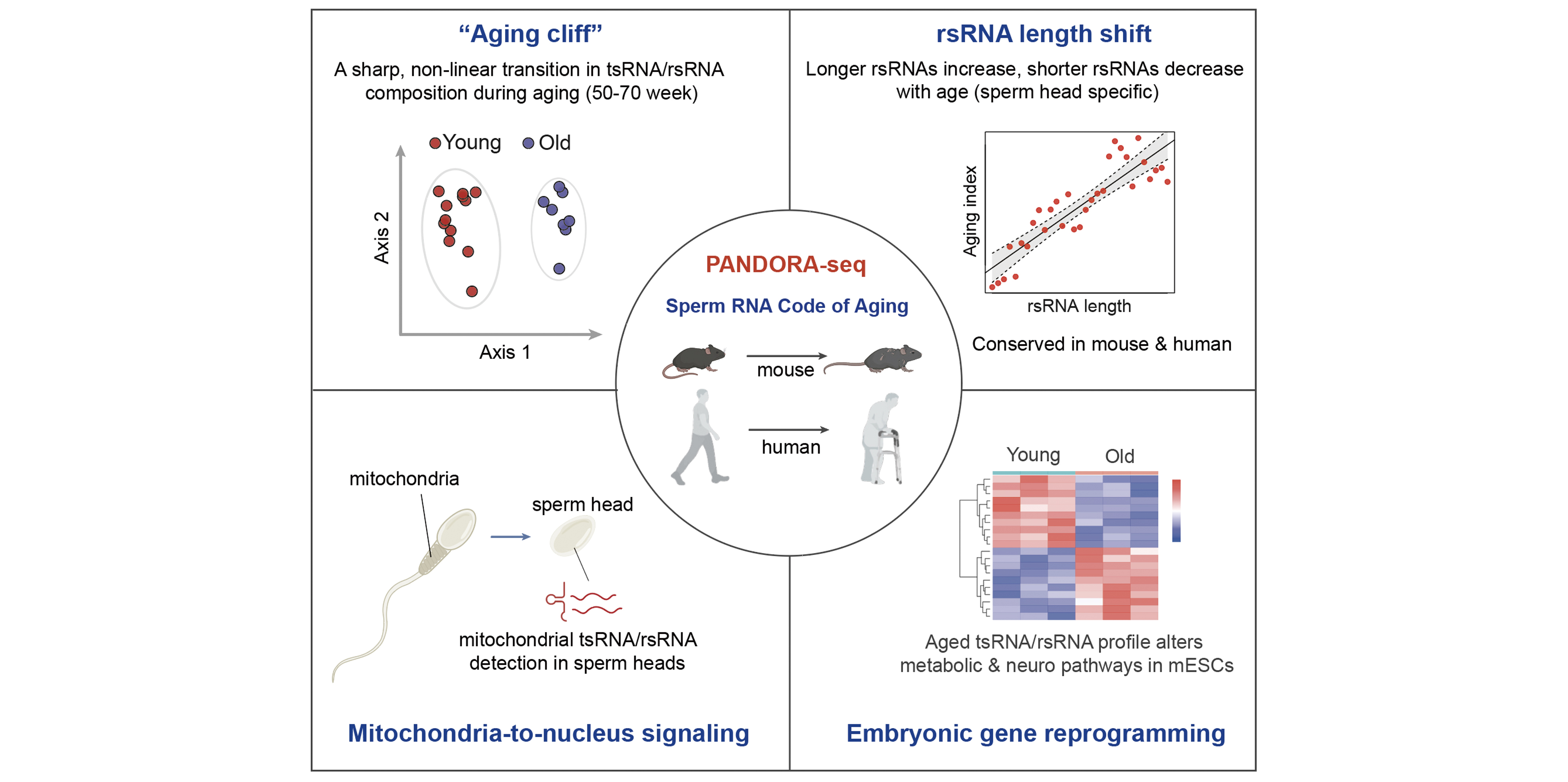
| 2026年1月21日 | 我们的新论文发表于EMBO Journal!利用PANDORA-seq,我们揭示了精子小RNA随衰老发生的变化,包括小鼠和人类精子头部中保守的rsRNA长度转变,以及显著的“衰老断崖”现象。 |
| 2025年10月26日 | 张力文博士在10月23–26日于南昌举行的2025年CSBMB全国学术大会上获得最佳墙报奖。 |
精选论文
- EMBO JConserved shifts in sperm small non-coding RNA profiles during mouse and human agingJunchao Shi*, Xudong Zhang*, Chen Cai, Shichao Liu, Jiancheng Yu, Emma R James, Lihua Liu, Benjamin R Emery, Megan R McMurray Bires, Elizabeth Torres-Arce, Hukam C Rawal, Joemy Ramsay, Jason Kunisaki, Changcheng Zhou, David S Milstone, Mary Elizabeth Patti, Xiaoxu Yang, Tim G Jenkins, Aaron Quinlan, Bradley R Cairns, Paul Schimmel, James M Hotaling, Kenneth I Aston#, Tong Zhou#, and Qi Chen#The EMBO Journal Apr 2026
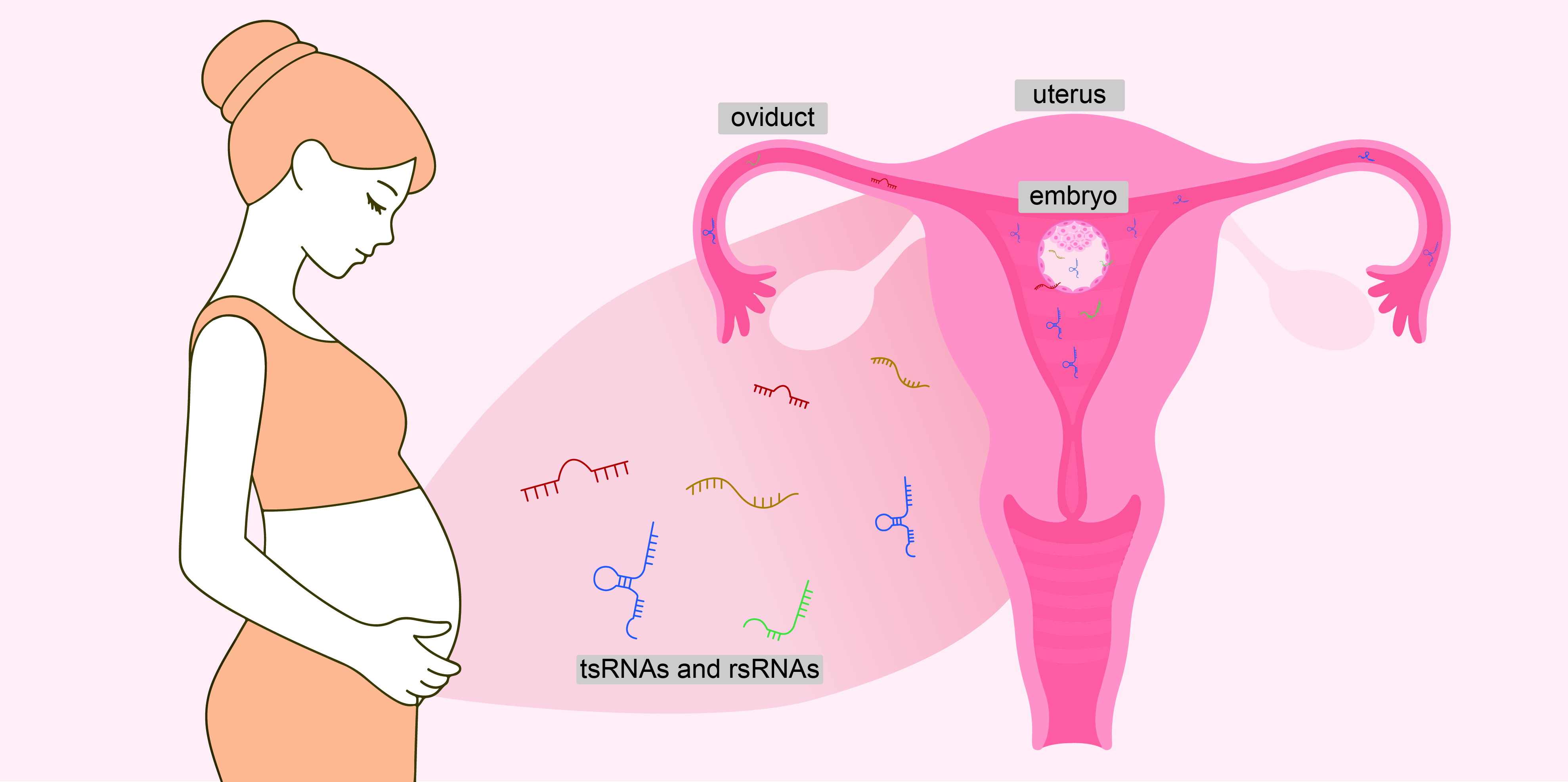
Sperm aging impacts male fertility and offspring health, highlighting the need for reliable aging biomarkers to guide reproductive decisions. However, the molecular determinants of sperm fitness during aging remain ill-defined. Here, we profiled sperm small non-coding RNAs (sncRNAs) using PANDORA-seq, which overcomes RNA modification-induced detection bias to capture previously undetectable sncRNA species associated with mouse and human spermatozoa throughout the lifespan. We identified an "aging cliff" in mouse sperm RNA profiles-a sharp age-specific transition marked by significant shifts in genomic and mitochondrial tRNA-derived small RNAs (tsRNAs) and rRNA-derived small RNAs (rsRNAs). Notably, rsRNAs in mouse sperm heads exhibited a transformative length shift, with longer rsRNAs increasing and shorter ones decreasing with age, suggesting altered biogenesis or processing with age. Remarkably, this sperm head-specific shift in rsRNA length was consistently observed in two independent human aging cohorts. Moreover, transfecting a combination of tsRNAs and rsRNAs resembling the RNA species in aged sperm was able to induce transcriptomic changes in mouse embryonic stem cells, impacting metabolism and neurodegeneration pathways, mirroring the phenotypes observed in offspring fathered by aged sperm. These findings provide novel insights into longitudinal dynamics of sncRNAs during sperm aging, highlighting an rsRNA length shift conserved in mice and humans.
@article{shi2026conserved, title = {Conserved shifts in sperm small non-coding RNA profiles during mouse and human aging}, author = {Shi, Junchao and Zhang, Xudong and Cai, Chen and Liu, Shichao and Yu, Jiancheng and James, Emma R and Liu, Lihua and Emery, Benjamin R and McMurray Bires, Megan R and Torres-Arce, Elizabeth and Rawal, Hukam C and Ramsay, Joemy and Kunisaki, Jason and Zhou, Changcheng and Milstone, David S and Patti, Mary Elizabeth and Yang, Xiaoxu and Jenkins, Tim G and Quinlan, Aaron and Cairns, Bradley R and Schimmel, Paul and Hotaling, James M and Aston, Kenneth I and Zhou, Tong and Chen, Qi}, journal = {The EMBO Journal}, pages = {1--19}, year = {2026}, publisher = {Springer Nature}, url = {https://link.springer.com/article/10.1038/s44318-025-00687-8}, doi = {10.1038/s44318-025-00687-8}, } - Nat ProtocOptimized identification and characterization of small RNAs with PANDORA-seqJunchao Shi#, Yunfang Zhang#, Yun Li, Liwen Zhang, Xudong Zhang, Menghong Yan, Qi Chen, and Ying Zhang#Nature Protocols Apr 2025
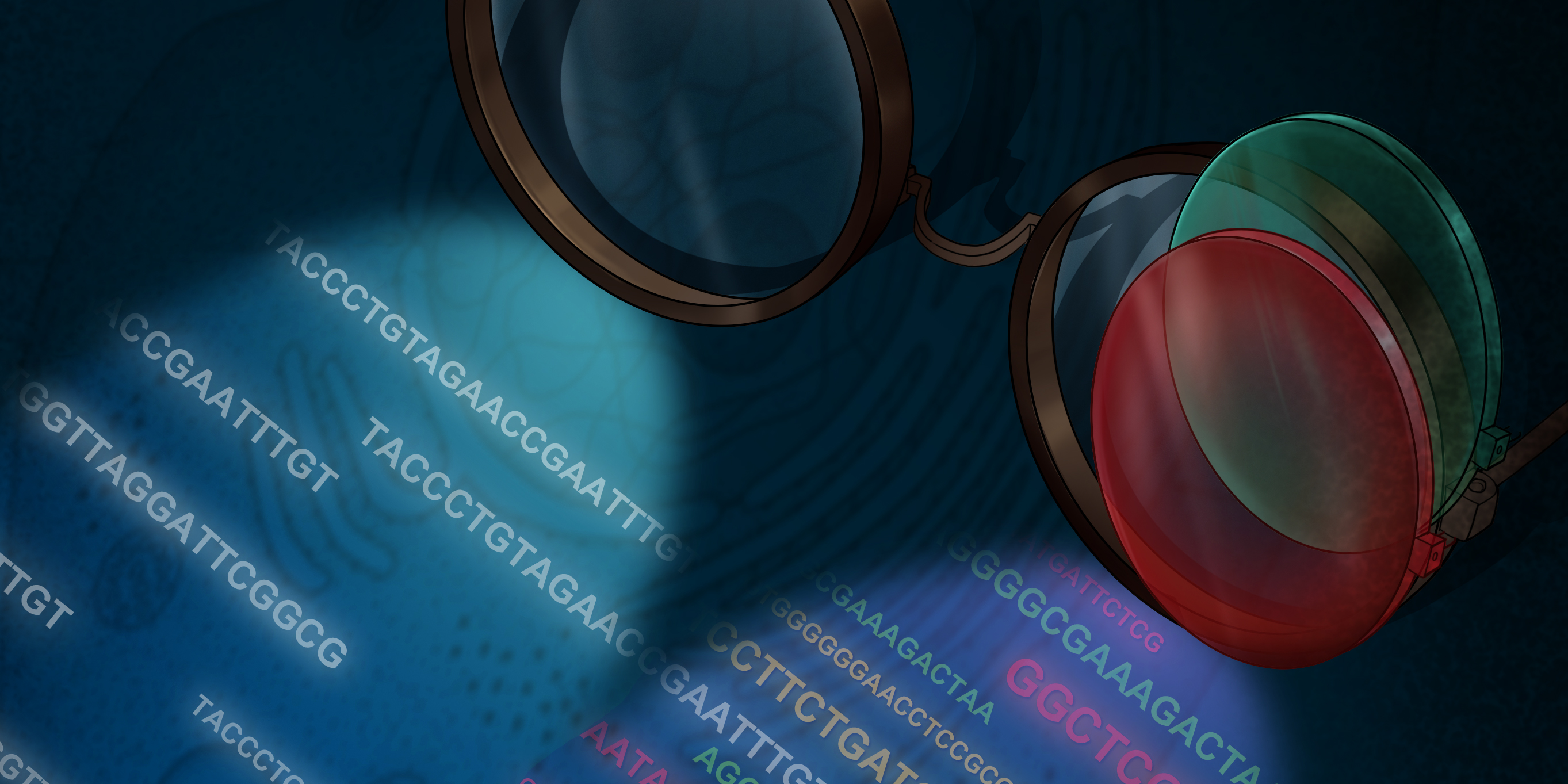
Small noncoding RNAs (sncRNAs) are a diverse group of RNAs including small interfering RNAs (siRNAs), microRNAs (miRNAs), PIWI-interacting RNAs (piRNAs) and RNAs derived from structured RNAs like transfer RNAs (tRNAs), ribosomal RNAs (rRNAs), and others. These sncRNAs have varied termini and RNA modifications, which can interfere with adaptor ligation and reverse transcription during cDNA library construction, hindering detection of many types of sncRNAs by standard small RNA sequencing methods. To address this limitation, PANDORA-seq introduces a refined methodology. The procedure includes sequential enzymatic treatments of size-selected RNAs with T4PNK and AlkB, which effectively circumvent the challenges presented by the ligation-blocking termini and reverse transcription-blocking RNA modifications, followed by tailored small RNA library construction protocols and deep sequencing. The obtained datasets are analyzed with the SPORTS pipeline, which can comprehensively analyze various types of sncRNAs beyond the traditionally studied classes, to include those derived from various parental RNAs (e.g., from tRNA and rRNA), as well as output the locations on the parental RNA from which these sncRNAs are derived. The entire protocol takes 7 days, depending on the sample size and sequencing turnaround time. PANDORA-seq provides a transformative tool to further our understanding of the expanding small RNA universe and to explore the uncharted functions of sncRNAs.
@article{shi2025optimized, title = {Optimized identification and characterization of small RNAs with PANDORA-seq}, author = {Shi, Junchao and Zhang, Yunfang and Li, Yun and Zhang, Liwen and Zhang, Xudong and Yan, Menghong and Chen, Qi and Zhang, Ying}, journal = {Nature Protocols}, pages = {1--27}, year = {2025}, month = apr, publisher = {Nature Publishing Group}, doi = {10.1038/s41596-025-01158-4}, url = {https://www.nature.com/articles/s41596-025-01158-4}, } -
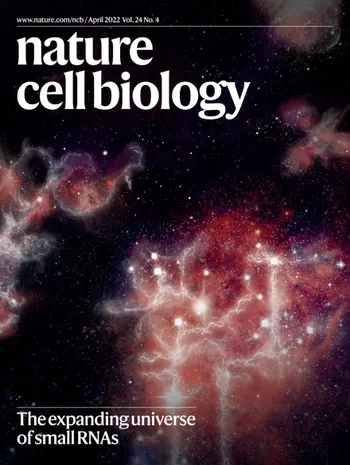
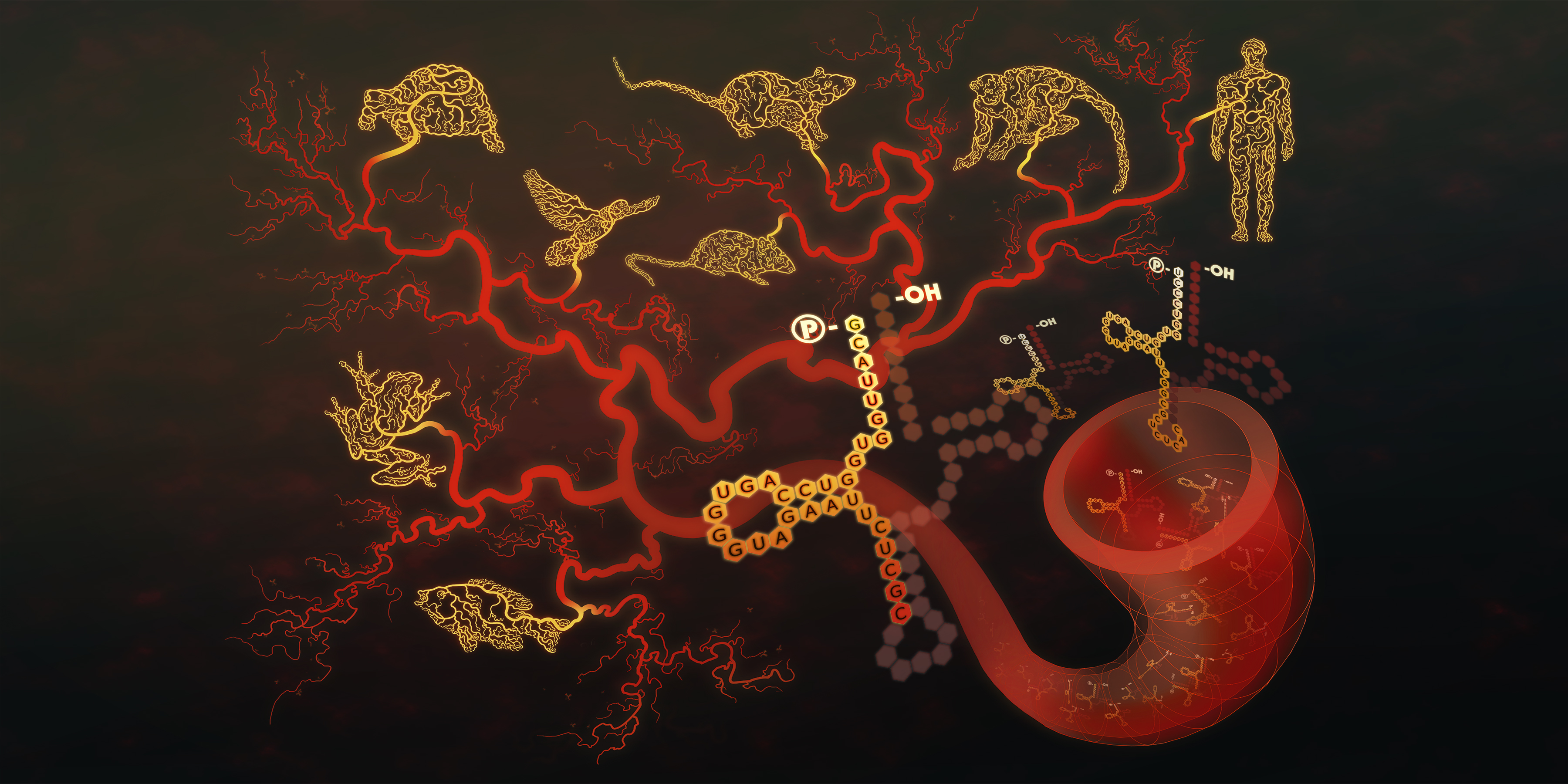
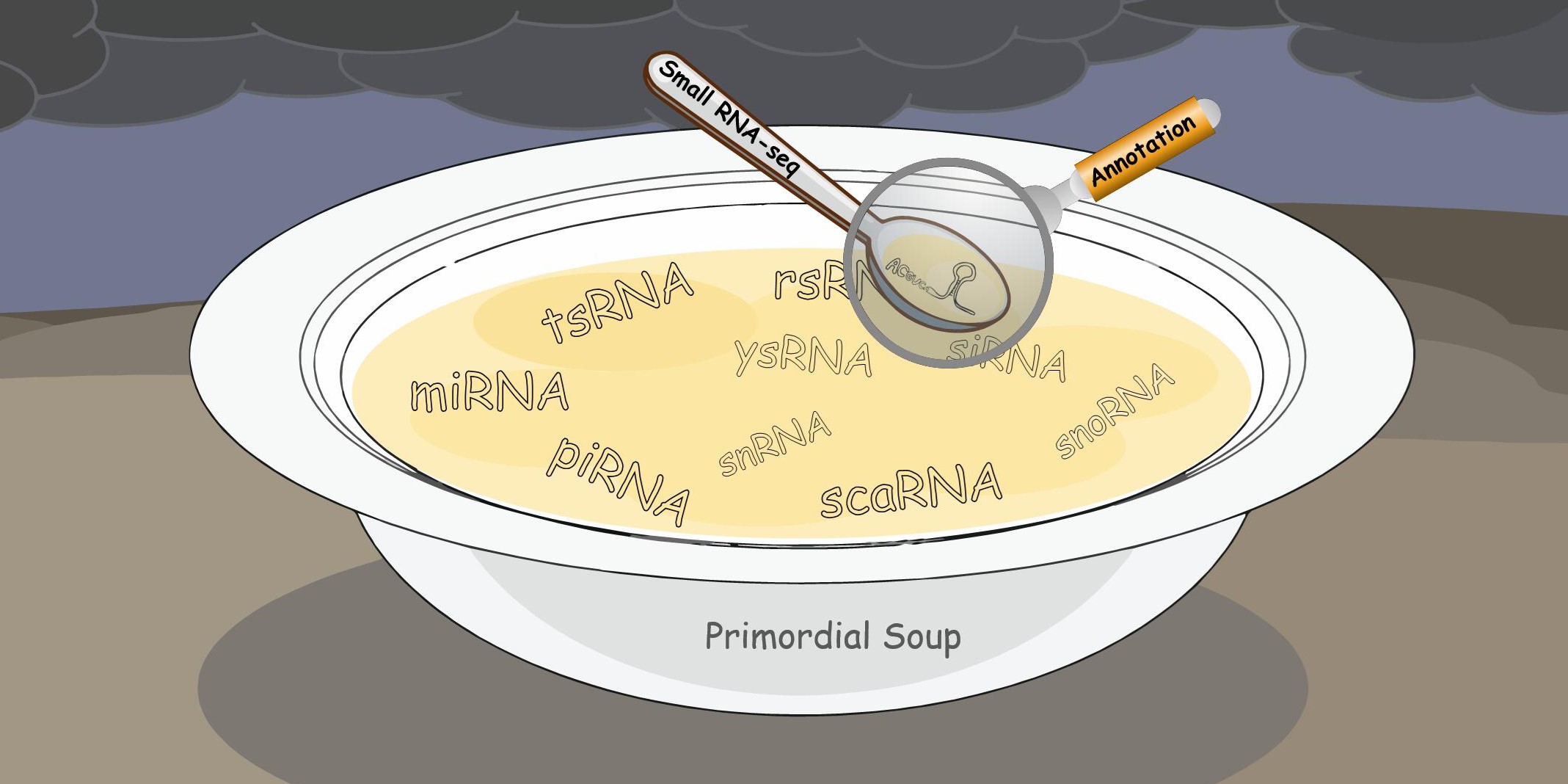
Cover Story Exploring the expanding universe of small RNAsNature Cell Biology Apr 2022The world of small noncoding RNAs (sncRNAs) is ever-expanding, from small interfering RNA, microRNA and Piwi-interacting RNA to the recently emerging non-canonical sncRNAs derived from longer structured RNAs (for example, transfer, ribosomal, Y, small nucleolar, small nuclear and vault RNAs), showing distinct biogenesis and functional principles. Here we discuss recent tools for sncRNA identification, caveats in sncRNA expression analysis and emerging methods for direct sequencing of sncRNAs and systematic mapping of RNA modifications that are integral to their function.
@article{shi2022exploring, title = {Exploring the expanding universe of small RNAs}, author = {Shi, Junchao and Zhou, Tong and Chen, Qi}, journal = {Nature Cell Biology}, volume = {24}, number = {4}, pages = {415--423}, year = {2022}, month = apr, publisher = {Nature Publishing Group}, doi = {10.1038/s41556-022-00880-5}, url = {https://www.nature.com/articles/s41556-022-00880-5}, } - Nat Cell BiolPANDORA-seq expands the repertoire of regulatory small RNAs by overcoming RNA modificationsJunchao Shi*, Yunfang Zhang*, Dongmei Tan*, Xudong Zhang*, Menghong Yan*, Ying Zhang*, Reuben Franklin*, Marta Shahbazi, Kirsty Mackinlay, Shichao Liu, Bernhard Kuhle, Emma R James, Liwen Zhang, Yongcun Qu, Qiwei Zhai, Wenxin Zhao, Linlin Zhao, Changcheng Zhou, Weifeng Gu, Jernej Murn, Jingtao Guo, Douglas T Carrell, Yinsheng Wang, Xuemei Chen, Bradley R Cairns, Xiang-lei Yang, Paul Schimmel, Magdalena Zernicka-Goetz, Sihem Cheloufi#, Ying Zhang#, Tong Zhou#, and Qi Chen#Nature Cell Biology Apr 2021
Although high-throughput RNA sequencing (RNA-seq) has greatly advanced small non-coding RNA (sncRNA) discovery, the currently widely used complementary DNA library construction protocol generates biased sequencing results. This is partially due to RNA modifications that interfere with adapter ligation and reverse transcription processes, which prevent the detection of sncRNAs bearing these modifications. Here, we present PANDORA-seq (panoramic RNA display by overcoming RNA modification aborted sequencing), employing a combinatorial enzymatic treatment to remove key RNA modifications that block adapter ligation and reverse transcription. PANDORA-seq identified abundant modified sncRNAs-mostly transfer RNA-derived small RNAs (tsRNAs) and ribosomal RNA-derived small RNAs (rsRNAs)-that were previously undetected, exhibiting tissue-specific expression across mouse brain, liver, spleen and sperm, as well as cell-specific expression across embryonic stem cells (ESCs) and HeLa cells. Using PANDORA-seq, we revealed unprecedented landscapes of microRNA, tsRNA and rsRNA dynamics during the generation of induced pluripotent stem cells. Importantly, tsRNAs and rsRNAs that are downregulated during somatic cell reprogramming impact cellular translation in ESCs, suggesting a role in lineage differentiation.
@article{shi2021pandora,
  title = {PANDORA-seq expands the repertoire of regulatory small RNAs by overcoming RNA modifications},
  author = {Shi, Junchao and Zhang, Yunfang and Tan, Dongmei and Zhang, Xudong and Yan, Menghong and Zhang, Ying and Franklin, Reuben and Shahbazi, Marta and Mackinlay, Kirsty and Liu, Shichao and Kuhle, Bernhard and James, Emma R and Zhang, Liwen and Qu, Yongcun and Zhai, Qiwei and Zhao, Wenxin and Zhao, Linlin and Zhou, Changcheng and Gu, Weifeng and Murn, Jernej and Guo, Jingtao and Carrell, Douglas T and Wang, Yinsheng and Chen, Xuemei and Cairns, Bradley R and Yang, Xiang-lei and Schimmel, Paul and Zernicka-Goetz, Magdalena and Cheloufi, Sihem and Zhang, Ying and Zhou, Tong and Chen, Qi},
  journal = {Nature Cell Biology},
  volume = {23},
  number = {4},
  pages = {424--436},
  year = {2021},
  month = apr,
  publisher = {Nature Publishing Group},
  doi = {10.1038/s41556-021-00652-7},
  url = {https://www.nature.com/articles/s41556-021-00652-7},
}